Oak, Hickory, and Beech Mast: A Field Comparison
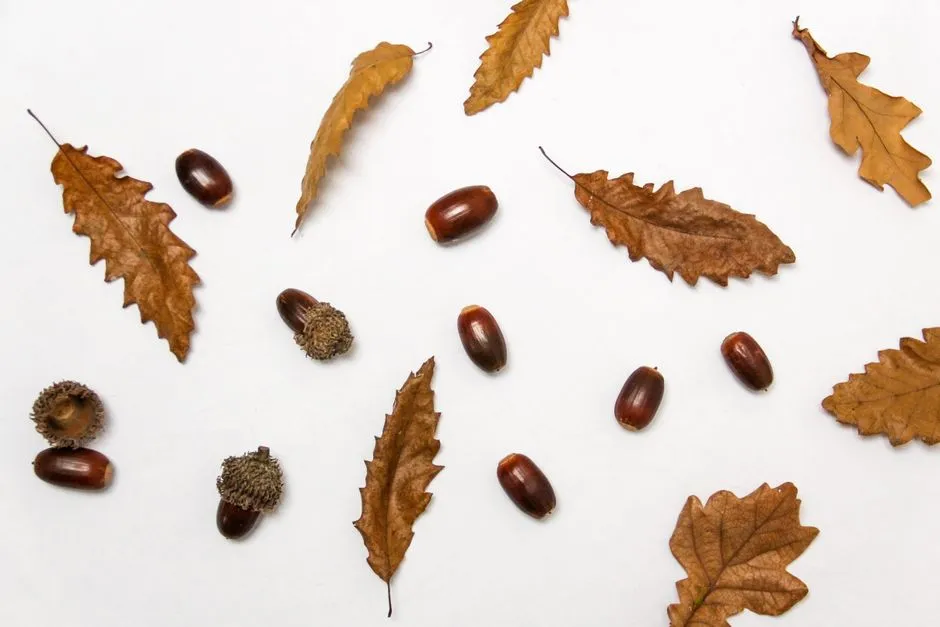
- What is beechmast, and how does it compare?
- Read beechmast as a crop, not a calendar promise
- Oaks offer many ways to match a site
- Hickories add hard nuts and structural diversity
- American beech belongs where mature forest fits
- Compare the wildlife food, then compare the habitat
- Preserve proven producers before adding seedlings
- Build a mixed native portfolio
- Sources
What is beechmast, and how does it compare?
Beechmast means the beechnuts produced by beech trees, whether one nut, the fallen crop beneath a tree, or the wider seed crop across a stand. In eastern North American habitat work, that usually means American beech (Fagus grandifolia). Beechnuts are small triangular nuts released from prickly burs. They are hard mast, like oak acorns and hickory nuts, but the tree, crop pattern, shell, site role, and wildlife access differ.
Oak, hickory, and American beech all provide hard mast, but they are not interchangeable planting labels. Oaks offer the broadest menu of regionally native species and site tolerances; hickories add hard-shelled nuts and distinct upland or bottomland niches; American beech adds beechmast, shade tolerance, cavities, and mature-forest structure where disease risk and site fit allow it.
| Feature | Oaks (Quercus) | Hickories (Carya) | American beech (Fagus grandifolia) |
|---|---|---|---|
| Mast | Acorns | Hard-shelled nuts | Small triangular beechnuts, collectively called beechmast |
| Diversity | Many species across dry uplands to bottomlands | Several species with distinct site preferences | One widespread eastern North American species |
| Light pattern | Many mast-producing oaks fruit best with well-developed crowns | Generally need adequate light and crown room to fruit well | More shade tolerant; mature crowns still need resources |
| Wildlife role | Broadly used by birds and mammals | Nuts used by squirrels and other wildlife; tree structure adds value | Nuts, cavities, canopy, and mature-forest structure |
| Planning caution | White and red oak groups develop acorns on different timelines | Species identification and site matching are essential | Beech bark disease and beech leaf disease concerns vary regionally |
For most eastern North American habitat plans, oak is the first genus to evaluate, not the automatic winner. The right native hickory on its proper soil is better than the wrong oak in a wet hole, and preserving a healthy mature beech can contribute more this decade than planting a fashionable seedling that expires beside its tag.
Read beechmast as a crop, not a calendar promise
The U.S. Forest Service's American beech account says beechnuts mature in one growing season, ripen from September through November in northern and central states, and usually occur two—or rarely three—to a bur. It reports good crops at intervals of 2 to 8 years. That historical silvics range describes variable reproduction; it is not a countdown for an individual tree or county.
A separate Forest Service paper followed 41 northern-hardwood stands in New Hampshire for six years. In that specific dataset, production increased with stand age or dominant-tree diameter and the proportion of beech basal area. Losses to insects, rodents, and birds before seed reached the ground ranged from 24 to 100 percent, and good seed years occurred about every third year. Those figures are useful evidence that visible flowers or burs do not equal an intact ground crop. They are not a national forecast.
When someone reports “heavy beechmast,” ask what was measured:
| Observation | What it can show | What it cannot establish alone |
|---|---|---|
| Many burs in one crown | That tree carried a visible fruit crop | Sound nuts on the ground or a regional mast year |
| Many beechnuts under one tree | Local seedfall at that tree | Equal production throughout the stand |
| Repeated seed-trap counts | Comparable production at the sampled points | Conditions outside the sampling design |
| Wildlife feeding activity | Animals found usable food there | The original crop size before predation |
The 2025 Co-mast dataset illustrates the scale issue: it harmonizes annual seed records from 141 woody species across nine U.S. long-term research or monitoring sites. Its authors distinguish individual, population, community, species, and regional patterns. A prolific beech is evidence about that tree; calling the entire region a mast year requires broader observations.
Oaks offer many ways to match a site
Oaks occur across an unusually broad range of eastern habitats. Some regionally native species favor dry ridges or rocky slopes; others tolerate moist bottomlands, periodic flooding, or heavier soils. “Plant an oak” is therefore the beginning of site selection, not its conclusion.
Identify soil texture, drainage, flooding, pH, available light, winter conditions, heat, and mature rooting space. Then consult local extension, forestry, and native-plant sources for species native to that county or ecoregion. A red oak from one nursery row and an overcup oak from the next can have very different relationships with water.
Oaks provide more than acorns. Leaves, bark, twigs, canopy, cavities, and the insects associated with native oaks support food webs and shelter. A mast-only score misses much of the ecological work.
White-oak-group acorns mature in one season
Species in the white oak group flower in spring and mature acorns by fall of that same growing season. Their acorns commonly germinate soon after falling and do not tolerate drying or long storage well. Direct seeding therefore requires species-specific collection, storage, and planting guidance.
A late frost that damages flowers can reduce the same autumn's crop. Weather during pollination and development matters, as do crown condition and individual-tree productivity. Do not promise a fixed “every X years” crop; Forest Service studies show strong variation by tree, stand, site, and year.
Red-oak-group acorns take two growing seasons
Species in the red oak group flower in spring and mature those acorns in the following fall. The tree can simultaneously carry developing second-year acorns and new flowers for the next crop. This two-season schedule exposes the crop to a different sequence of weather than white-oak-group acorns.
Red-oak-group acorns usually require a cold period before germination. Collection and direct-seeding instructions differ from white-oak-group species. A bucket labeled only “acorns” has already lost information the seedlings need.
Oak's honest drawback
Most oaks are long-term habitat investments. Substantial mast may take many years, and a young tree's first crop does not guarantee steady production. Mature size, falling limbs and acorns, roots, utilities, roads, buildings, and prescribed management all need room. Oak wilt, sudden oak death, insects, and other regional threats also change species and stock choices.
Hickories add hard nuts and structural diversity
Hickories produce hard-shelled nuts. All hickories have wildlife value, but nut size, husk, kernel palatability, site preference, mature form, and geographic range differ among species. Shagbark, pignut, mockernut, bitternut, shellbark, and other hickories should not be treated as one generic “deer tree.”
Some hickories favor well-drained uplands; others occur on richer, moister bottomlands. Pecan belongs to the hickory genus too and has its own climate and soil requirements. Use local identification and site sources rather than ordering the species with the most appetizing common name.
Hickory nuts feed squirrels and other mammals, while wild turkey and additional wildlife may use broken nuts or associated habitat. Mature hickories also offer canopy and, with age or decay, potential cavities. Bark characteristics on species such as shagbark can add roosting or shelter features for some wildlife, though a single tree is not an entire habitat prescription.
Hickory's honest drawback
Hickories can be slow to establish and difficult to move once larger because of their root systems. Nursery stock quality and planting depth matter. A fast-growing sales description should not outrank local evidence about transplanting, soil, and mature performance.
Hard shells also mean not every animal can access the kernel easily. Wildlife use changes as nuts split, decay, or are opened by other consumers. Plant hickory as part of a mixed habitat, not because every nut will become a direct meal for the featured species.
American beech belongs where mature forest fits
American beech is a large, shade-tolerant tree native across much of eastern North America. It produces small, sharply angled beechnuts within prickly husks. The Forest Service lists mice, squirrels, chipmunks, black bear, deer, foxes, ruffed grouse, ducks, and blue jays among consumers of beechmast. Use still varies with place, crop size, competing foods, and the local animal community.
Beech can persist under a canopy and respond to openings, making it ecologically different from many light-demanding oaks. Mature trees contribute dense shade, cavities, smooth bark, roots, and forest structure. Existing beech may be a valuable component even in a year with few nuts.
Site fit still controls. Beech typically belongs in forest or spacious woodland settings, not compressed beneath utility lines or beside pavement where roots, mature crown, and smooth bark face repeated injury. It can spread through root suckers in some conditions, which affects stand structure.
Beech's honest drawback
Beech bark disease and beech leaf disease create serious concerns in parts of the range. Distribution and severity change, so consult current state forestry or extension guidance before planting or moving material. Maine's current forestry page notes that beech leaf disease can kill American and other beeches, that symptoms often begin in smaller understory trees, and that larger trees are also vulnerable. Use the current authority for the location rather than treating one state's status as a range-wide map.
A region with active disease may favor conserving healthy mature trees, monitoring regeneration, or selecting other native mast species under a professional plan. Do not diagnose disease from one leaf photo or move plant material contrary to current quarantine or nursery guidance.
Beechnut crops also vary substantially. Do not plant one beech and schedule a turkey banquet. The tree's broader mature-forest value is the sturdier reason to include it.
Compare the wildlife food, then compare the habitat
Acorns, hickory nuts, and beechnuts all supply concentrated fall food, but size and shell affect which animals can handle them. Jays, woodpeckers, wild turkey, ducks in appropriate habitat, deer, black bear, raccoons, chipmunks, mice, and squirrels are among the many consumers associated with hard mast, with exact use varying regionally.
Some animals cache seeds. Jays and squirrels may carry acorns away from the parent tree and bury them; forgotten seeds can contribute to regeneration. Other consumers destroy the embryo. A gnawed seed is part of the food web even when it never becomes a sapling.
No tree feeds wildlife year-round. Spring buds, summer insects and fruits, fall nuts, winter cover, nesting sites, den cavities, and water all matter. Pair this hard-mast comparison with hard mast versus soft mast to fill more seasons.
Preserve proven producers before adding seedlings
Inventory existing trees by species, size, crown condition, crop history, cavity value, structural risk, and position. Some individual oaks are consistently productive; others remain poor producers. A forester can identify crop trees whose crowns might benefit from carefully planned release, while retaining stand diversity and habitat structure.
Do not remove non-mast trees casually. Conifers provide thermal cover, dead wood supports cavities and decomposers, and young forest supports insects and browse. Releasing a crown can also increase invasive plants, wind exposure, or epicormic branching. Management needs a stand-level prescription.
Hazard comes first around homes, roads, and gathering areas. Have a qualified arborist assess declining or structurally defective trees. Wildlife value does not require accepting an unmanaged target over the roof.
Build a mixed native portfolio
A resilient plan might include multiple native oak species suited to different microsites, one or more appropriate hickories, and beech only where its site and disease context support it. Add locally native soft-mast trees and shrubs, protect existing cover, and maintain different age classes.
The mast-year guide explains why crop timing will remain variable even in a diverse stand. Diversity reduces dependence on one species; it does not guarantee equal annual production.
When new trees are justified, use the mast-tree planting guide rather than installing all three genera by one generic nursery rule. Root form, moisture, browsing, stock type, and planting season vary.
Oak is the flexible backbone, hickory is a valuable hard-nut complement, and American beech is a mature-forest specialist with important disease caveats. The “best” one is the healthy, regionally native species growing on a site where it can still have a crown long after the plastic tag has surrendered to weather.
Sources
- U.S. Forest Service, “American Beech” — supports American beech fruit structure, one-season maturation, September-November ripening in northern and central states, seed-crop interval, dispersal, shade, and regeneration claims. Accessed September 4, 2026.
- U.S. Forest Service, “Six-year beechnut production in New Hampshire” — supports the exact six-year, 41-stand New Hampshire study scope, measured production relationships, pre-ground losses, and local good-year result. Accessed September 4, 2026.
- U.S. Forest Service, American beech FEIS review — supports American beech wildlife use, shade and root-sucker ecology, and historic disease-management context. Accessed September 4, 2026.
- U.S. Forest Service, “Co-mast” dataset — supports the distinction among individual, population, community, species, and regional seed-production evidence and the 141-species, nine-site dataset scope. Accessed September 4, 2026.
- U.S. Forest Service, “Chestnut Oak” and “Northern Red Oak” — support the one-growing-season versus two-season acorn examples used to explain the white- and red-oak-group timelines. Accessed September 4, 2026.
- U.S. Forest Service, “Shagbark Hickory” — supports the named shagbark-hickory wildlife-use scope and the need to treat hickory claims by species. Accessed September 4, 2026.
- Maine Forest Service, “Beech Leaf Disease” — supports the Maine-scoped disease, vulnerability, symptom, mast, and cavity context. Accessed September 4, 2026.