Hard Mast vs Soft Mast: Build a Longer Food Calendar
- Hard mast stores energy; soft mast stretches the season
- “Mast” is a wildlife term, not one botanical category
- What qualifies as hard mast?
- Hard mast anchors fall and winter
- Separate production, availability, and wildlife use
- Soft mast fills gaps and vertical layers
- Build a food calendar, not a shopping list
- Use native plants as the working default
- Pair food with cover and life-cycle needs
- Decide whether to plant, release, or protect
- Use mixtures without making a random bundle
Hard mast stores energy; soft mast stretches the season
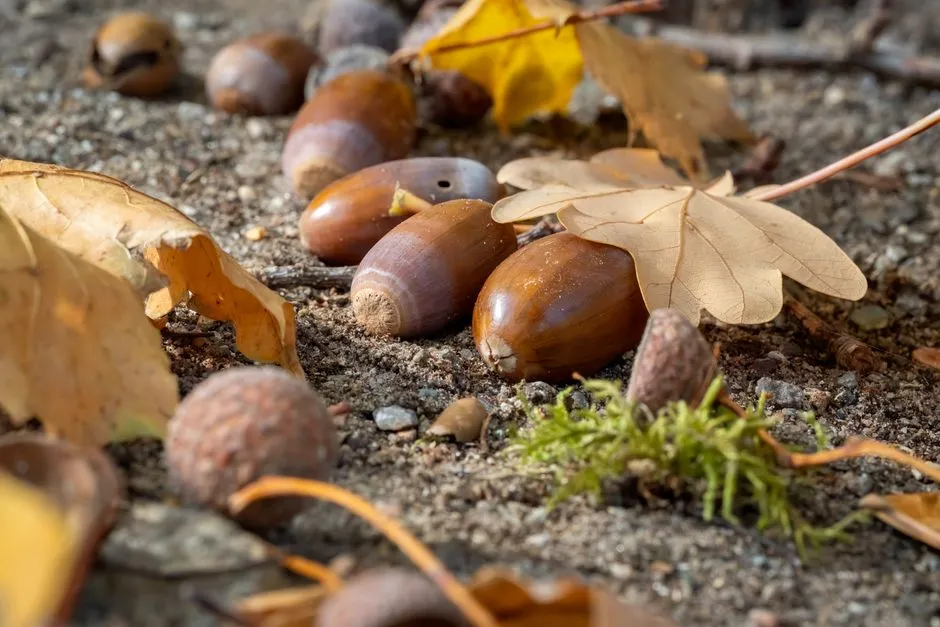
Hard mast is nutlike fruit such as acorns, hickory nuts, beechnuts, and chestnuts. Soft mast is fleshy fruit such as persimmon, cherry, serviceberry, dogwood fruit, native plum, or pawpaw. Hard mast often supplies concentrated fall and winter food that can persist on the ground; soft mast can fill summer, fall, and sometimes winter windows.
The USDA Forest Service uses the same working distinction: mast is the nuts and fruits produced by woody plants, hard mast is nuts, and soft mast is fleshy fruit. It is a habitat-management vocabulary, not a claim that every species produces on the same schedule or feeds the same animals.
For wildlife habitat, the better choice is usually both—using locally native species matched to the site. A hard-mast monoculture bets the food calendar on one kind of crop. A soft-mast-only planting can produce a brilliant but short-lived buffet whose entire season is measured by how fast birds discover it.
| Habitat question | Hard mast | Soft mast |
|---|---|---|
| Typical form | Nut or acorn | Fleshy fruit or berry-like fruit |
| Common examples | Oak, hickory, beech, chestnut | Persimmon, cherry, serviceberry, dogwood, native plum |
| Common timing | Often late summer through fall, with some winter persistence | Species-dependent from early summer into winter |
| Storage in habitat | Can persist when sound and protected from decay or consumers | Often eaten, fermented, dried, or decayed sooner |
| Main planning value | Concentrated cool-season food | Wider fruiting windows and smaller-tree or shrub layers |
| Main risk | Irregular crop years and long time to maturity | Short fruit windows, disease, and rapid spoilage |
“Mast” is a wildlife term, not one botanical category
Forestry sources define mast broadly as fruits of trees and shrubs used by wildlife. Hard and soft refer to the physical food, not whether the plant is botanically a tree, whether people can eat it, or whether the seed is nutritious for every animal.
A berry-like dogwood fruit and a persimmon can both count as soft mast despite being different botanical fruit types. A chestnut and an acorn both count as hard mast despite coming from different genera. The categories are useful for habitat planning because persistence, handling, and seasonal availability often differ.
They are not safety labels. Wildlife can eat plants unsafe for people, pets, horses, cattle, or other animals. Correct identification, plant part, ripeness, preparation, contamination, and consumer species all matter. Tracks beneath a fruiting tree are not a restaurant license.
What qualifies as hard mast?
In ordinary forestry and wildlife-habitat use, hard mast means nutlike fruit from woody plants. Acorns, hickory nuts, beechnuts, and chestnuts are the clearest examples. The exact producer list depends on the region and the woody plants present there.
The boundary is about the fruit and its habitat role, not the everyday hardness of an object. A dry seed is not automatically hard mast, and a crop does not become mast merely because wildlife eats it. The North Carolina Wildlife Resources Commission separates herbaceous crops such as corn, wheat, sorghum, and soybeans from mast-producing trees and shrubs in its supplemental-food guidance.
This definition prevents two common planning errors. First, hard mast is not synonymous with acorns: oaks are central producers, but they are not the whole category. Second, hard mast is not a quality grade above soft mast. A nut crop and a fleshy-fruit crop contribute different timing, persistence, structure, and wildlife relationships. The useful question is what each plant adds to the local habitat calendar.
Hard mast anchors fall and winter
Acorns, hickory nuts, and beechnuts deliver dense food packages in autumn. Many birds and mammals use them, including squirrels, chipmunks, mice, jays, woodpeckers, wild turkey, deer, raccoons, bear, and others depending on region and habitat.
Sound nuts may remain available after leaf fall, beneath snow, or in animal caches. Persistence varies. Moisture, fungi, insects, freeze-thaw cycles, flooding, germination, and consumption remove food. White-oak-group acorns often germinate soon after fall, while red-oak-group acorns commonly remain dormant until after a cold period, changing how long intact seed may be present.
The oak, hickory, and beech comparison explains those producers in more detail. Their value extends beyond mast through insects, canopy, bark, cavities, and forest structure.
Hard mast's weakness is synchronized scarcity
Mast crops fluctuate. A heavy oak year can be followed by a sparse one, and individual species may respond differently. The mast-year explanation shows why the pattern is not a reliable calendar.
A mixed stand reduces dependence on one species, but neighboring species can still share drought, frost, storm, insect, or disease stress. Hard mast also takes time: large forest trees may need years or decades before meaningful production. Habitat planning must preserve mature producers while younger cohorts develop.
Separate production, availability, and wildlife use
A tree can produce many nuts without putting the same amount of usable food on the ground. Keep three observations separate:
- Production is the crop formed on the plant.
- Availability is the sound mast an animal can reach after insects, fungi, weather, germination, and other consumers take their share.
- Use is evidence that a particular animal actually ate, carried, or cached it.
The distinction matters because each stage can change the conclusion. An oak crown may carry a conspicuous crop, yet many acorns can be damaged before or after drop. The Forest Service's white oak species account documents losses to insects and animals and distinguishes the mature crop from sound, fully developed acorns. Conversely, bare ground beneath a tree does not prove crop failure; animals may have removed or cached the fall.
For a practical property record, revisit the same trees before drop, during peak drop, and after the main fall. Note crop visibility in the crown, fruit or nuts on the ground, obvious insect damage or decay, germination, and signs of animal use. Keep the route and observation points consistent. This will not create a research-grade mast index, but it will stop a single busy squirrel or one empty patch of ground from becoming the whole year's verdict.
Soft mast fills gaps and vertical layers
Soft-mast plants range from canopy trees such as black cherry to small trees and shrubs such as serviceberry, dogwood, elderberry, hawthorn, viburnum, native plum, and others. The right list changes sharply by region. Some common names cover native and nonnative species, so the scientific identity and local range deserve verification.
Different species fruit from early summer through late fall, and some hold dried or persistent fruit into winter. That sequencing can provide food before acorns drop, during a poor hard-mast year, or after some nuts have disappeared.
Shrubs and small trees also build edge and understory structure. Dense branches can offer nesting or escape cover, flowers can support pollinators, and leaves can host insects. A fruiting shrub is not merely a low acorn substitute; it occupies a different habitat layer.
Soft mast's weakness is speed
Fleshy fruit can ripen and disappear quickly. Birds may strip a serviceberry in days. Persimmons may fall into one concentrated window. Warm wet weather can ferment or rot fruit, while drought can reduce size or cause early drop.
Some fruit trees need cross-pollination with compatible individuals; others are self-fruitful. Some alternate crops or suffer late-frost loss. Domestic apples, pears, and stone fruits can demand pruning, disease management, and pest control that a naturalized habitat plan did not budget. Never promise wildlife fruit from “two of everything” without checking pollination biology.
Build a food calendar, not a shopping list
Inventory what already fruits in each season. Walk the property monthly through one full growing season if possible. Identify plants correctly and record flower, unripe fruit, ripe fruit, seed drop, persistence, and signs of use.
Create columns for:
- Early-season flowers and insects.
- Early and midsummer soft mast.
- Late-summer and early-fall soft mast.
- Fall hard mast.
- Winter-persistent fruit or nuts.
- Cover and water in each season.
Look for empty columns, but do not assume every gap needs planting. Nearby habitat, migratory behavior, and the target wildlife's actual needs matter. A local wildlife biologist can distinguish a real limiting resource from a column that merely offends spreadsheet symmetry.
Then match possible native species to microsites. A wet swale, dry ridge, sunny old field, shaded forest edge, stream buffer, and compacted yard should not receive the same package. The plant's mature height and spread, root behavior, disease context, and management needs remain part of the decision.
Use native plants as the working default
Locally native trees and shrubs generally connect to regional insects and wildlife and are adapted to known ecological relationships, though even a native species can fail on the wrong microsite. Verify native status at the county or ecoregion level, not only the continent.
Avoid known invasive plants, even if birds eat their fruit. Wildlife consumption can spread seeds into natural areas, and abundant fruit does not erase displacement of native vegetation. Check current state or provincial invasive-species lists; legal sale does not always equal ecological wisdom.
Cultivars of native plants can differ in flower timing, fruit, size, or form. When habitat function is the goal, ask how the selection was propagated and whether its traits affect pollinators, fruiting, genetic diversity, or local adaptation. “Native cultivar” is a question category, not an automatic yes or no.
Pair food with cover and life-cycle needs
White-tailed deer, wild turkey, squirrels, grouse, songbirds, and other mast users require more than calories. Turkey poults depend heavily on insects and accessible brood habitat. Squirrels use den trees and canopy connections. Songbirds may need nesting structure that differs from where they feed.
Preserve snags and cavity trees where they can safely remain, retain conifer or evergreen cover where regionally appropriate, protect streams and seeps, and maintain a mosaic of age classes. Around homes and trails, have hazardous trees assessed and balance habitat with public safety.
Do not create concentrated feeding sites that increase conflict, disease transmission, or wildlife habituation. Planting natural food is different from dumping supplemental feed, but a tiny isolated grove can still concentrate use. Follow wildlife-agency guidance and do not bait where prohibited.
Decide whether to plant, release, or protect
Sometimes the best mast project is not planting. Existing young oaks may need browse protection. A productive mature crown may benefit from professional release from direct competitors. A fruiting forest edge may need invasive control and protection from mowing.
Release means selectively reducing competition around a desired tree under a silvicultural plan. It can increase crown light and growth, but also bring wind exposure, invasive plants, sprouts, and altered stand structure. A forester should select crop trees and prescribe the treatment.
Plant when the inventory identifies a real gap, the species fits, and long-term maintenance is available. The mast-tree planting guide covers root flare, native-soil backfill, mulch, water, guards, and monitoring.
Use mixtures without making a random bundle
A strong plan contains functional diversity rather than one specimen of every appealing catalog item. Choose several species whose site needs overlap appropriately but whose fruiting seasons, genera, sizes, and disease vulnerabilities differ.
On a sunny upland, that might mean regionally native oaks and hickory with a native fruiting edge. In a moist bottomland, it may mean different oak species plus appropriate fruiting shrubs. In a small yard, one correctly placed native small tree and several shrubs may outperform three future 90-foot trees pressed against utilities.
Space for mature crowns and root zones. Group compatible plants where pollination requires it, but avoid dense permanent crowding. Use multiple stock sources only when provenance and health rules allow, and never move plants or seeds across quarantines.
Hard mast supplies a durable fall pulse. Soft mast extends the calendar and fills lower habitat layers. Combine them, but judge the plan by establishment, seasonal coverage, native relationships, and the whole habitat—not by how many fruits appear in the nursery photograph, where every tree is apparently mature, healthy, and posing on the same Tuesday.