When Is Mast Season? Species and Regional Timing
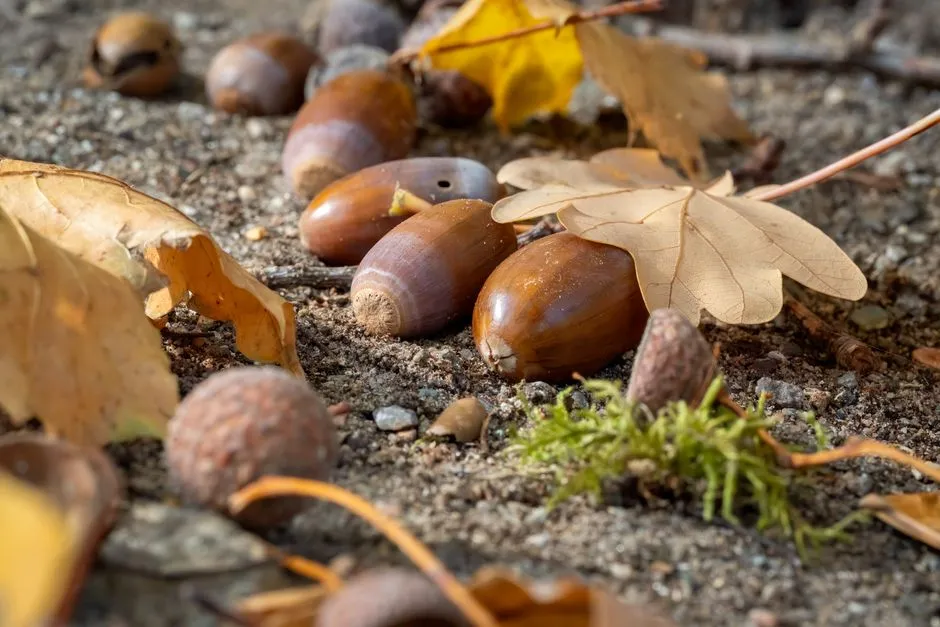
When is mast season?
For the eastern North American trees covered here, hard-mast season is mainly autumn, but there is no single start date. White oak acorns fall in September or October; shagbark hickory dispersal can continue through December. Beech follows a frost-linked schedule, and soft-mast fruits can arrive earlier. These are species-specific reference windows, not a local forecast or an eating-safety guide. A normal seed-fall season is not automatically a heavy mast year.
The calendar has several columns, not one big box marked “acorns.” Start with the tree's identity, then ask whether a source describes ripening, falling seeds, or food remaining afterward.
Which months belong to which tree?
The following reference windows come from the U.S. Forest Service's Silvics of North America species accounts. Published in 1990 and currently hosted by the agency, these describe species biology rather than this year's conditions. They primarily concern eastern North American trees, not every oak, hickory, or beech worldwide.
| Identified species | Source's seasonal window | What the window actually describes |
|---|---|---|
| White oak, Quercus alba | September or October | Acorns falling and beginning germination |
| Northern red oak, Quercus rubra | Late August to late October, depending on geographic location | Acorn ripening; not an exact seed-fall appointment |
| Shagbark hickory, Carya ovata | Ripening in September and October; dispersal September through December | Two overlapping but different stages |
| American beech, Fagus grandifolia | September to November ripening in the account's northern/central-state context | Seed fall follows the first heavy frosts opening the burs and finishes within a few weeks |
Sources: Forest Service accounts for white oak, northern red oak, shagbark hickory, and American beech.
The scientific names matter. “Red oak” can describe a species or a wider oak group; “hickory” covers several species. Do not transfer the shagbark row to every hickory. Likewise, American beech is not European beech. Use the tree-profiles hub to keep species questions separate from calendar shorthand.
The beech account also notes that the first fallen nuts are commonly aborted or insect-damaged. Seeing something fall is therefore not sufficient to label the mature crop underway.
How does the calendar change by region?
Use a regional source before shifting a date yourself. There is no defensible rule here such as “subtract a week for every state south.” A broad geographic range describes differences among places; it does not mean one tree fruits throughout that entire range.
Black cherry, Prunus serotina, provides a useful soft-mast example. The Forest Service account places fruit ripening and seed fall on the Allegheny Plateau between August 15 and mid-September. For the southeastern United States, it describes late-June ripening with seed fall complete by early July. It also reports differences in maturation of as much as three weeks among trees in one stand.
Those are alternative location-specific descriptions, not one continuous summer-long crop on each tree. For your own record, write the county or ecological region beside the species. Ask local extension or a forestry agency which reference applies if identification or regional timing is uncertain.
What should a month-by-month record contain?
This is an editorial observation organizer, not a forecast, official survey protocol, or planting prescription. Use local phenology—the timing of biological events—to adjust it.
| Months | Useful entry in a local notebook |
|---|---|
| January–March | Label any visible nuts as existing ground material unless there is evidence of recent drop; retain last autumn's dated records |
| April–May | Record visible flowering or developing fruit separately from mature seed fall |
| June–July | Include locally identified soft-mast species; the southeastern black-cherry example belongs here |
| August | Check local ripening references; do not automatically call an early fallen fruit mature |
| September–October | Keep separate rows for each oak, hickory, and beech, noting which stage is actually visible |
| November–December | Continue where local seed fall is evident; distinguish ongoing dispersal from old shells or empty burs |
This structure prevents a common bookkeeping error: calling anything found under a tree “today's crop.” It also leaves room for soft mast instead of treating summer as an ecological blank.
The Forest Service's mast overview distinguishes woody-plant nuts from fleshy fruits. The label tells you what kind of resource you are describing; it does not promise an uninterrupted food supply or establish safety for people, livestock, or pets.
How can you record a start without inventing a date?
The USA National Phenology Network's observation guidance separates developing fruits, ripe fruits, and recent fruit or seed drop. Its recent-drop guidance excludes clearly immature fallen fruits and empty structures that released their seeds long ago. Follow the current species-specific definitions if contributing to that program.
For a personal notebook, use an explicit evidence sentence. This fictional example demonstrates recordkeeping, not observations made by this publication:
- September 8: “No recent mature seed fall observed at the identified tree.”
- September 15: “Evidence of recent mature seed fall observed.”
- Summary: “First observed on September 15; previous check September 8.”
The visits are seven days apart. Do not rewrite that as “seed fall began September 15.” The first observation date is known; the precise biological start is not. If you could not inspect adequately, record uncertainty rather than a confident absence.
An end date deserves the same care. “Nothing new seen today” and “the season has ended” are different statements. Keep the actual notes rather than stretching observations into a cleaner-looking calendar.
Does an autumn drop mean this is a mast year?
No. Season describes timing; a mast year concerns unusually abundant reproduction in a population, interpreted against variation across years. The Forest Service-hosted research summary on masting synchrony defines mast seeding through highly variable, synchronized seed production.
A few fallen acorns identify an event, not a regional boom. Even a conspicuous pile needs context. For the separate question of crop abundance, use the mast-year forecasting guide. Keep this calendar focused on when stages occur, rather than turning it into another prediction index.
Our mast-science hub connects those questions without treating timing, crop size, and wildlife response as interchangeable.
What are the limits of a field calendar?
Observe only from permitted, safe ground-level locations. Do not climb, shake branches, enter road traffic, or approach damaged trees to complete a record. Refer structural concerns to a qualified arborist or forester.
Do not taste unknown fruits or nuts or feed them to animals. Wildlife use does not establish safety for another consumer. A timing table is not an identification key, foraging instruction, or veterinary assessment.
Use qualified local forestry or ecological advice before changing habitat management. A missed month or sparse crop is a reason to improve the record, not a prescription to cut, fertilize, burn, or plant.
Sources
- USDA Forest Service: White Oak.
- USDA Forest Service: Northern Red Oak.
- USDA Forest Service: Shagbark Hickory.
- USDA Forest Service: American Beech.
- USDA Forest Service: Black Cherry.
- USDA Forest Service: Mast Importance, Production, and Management.
- USDA Forest Service: Community Synchrony in Seed Production.
- USA National Phenology Network: Observation FAQs.